- © 2026 Annapolis Home Magazine
- All Rights Reserved

by Walinda P. West
Photography by John Cole
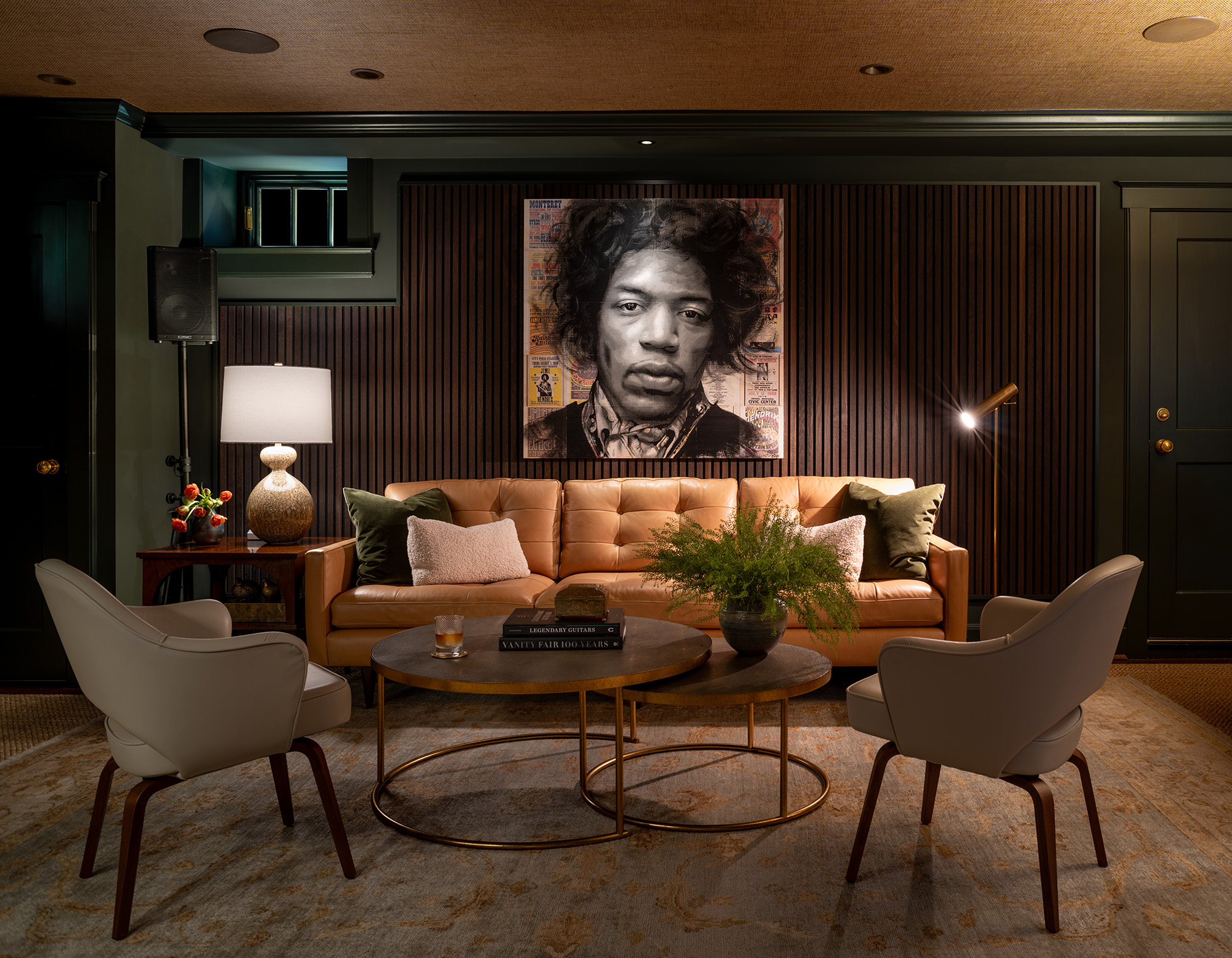
In the leafy Washington, D.C. neighborhood of Wesley Heights, homeowners Ellen and James Patterson set out to update their 1928 Tudor-style home into one befitting modern tech executives. The renovation delivered smart speakers, app-controlled lighting, top-of-the-line kitchen appliances, and a swoon-worthy lower-level addition featuring a gym, a spa bathroom, and a speakeasy. Yet one room in that new lower level stands apart as the home’s most radical space and the one with the least technology of all: the analog room.
Neither a rejection of innovation nor a nostalgic yearning for bygone days, analog rooms are intentionally low-tech spaces designed for presence, restoration, and tactile pleasure. Think slow board games instead of video games, instruments and record players instead of playlists, books instead of screens. A space free of the constant ding of incoming messages and mindless scrolling. In an era of connected everything, the analog room asks nothing of its homeowners. For the Pattersons, that absence of technology was not a sacrifice; it was the point.
The project was designed by BarnesVanze Architects, built by CarrMichael Construction, with an interior design by Colman Riddell Interiors. “This was a team effort,” says Wayne Adams, principal at BarnesVanze Architects, who took the lead on the project. “We like the best ideas, so we collaborate as much as possible,” Adams says. “It shows in the end, driven by the team working together to give the clients what they wanted.”
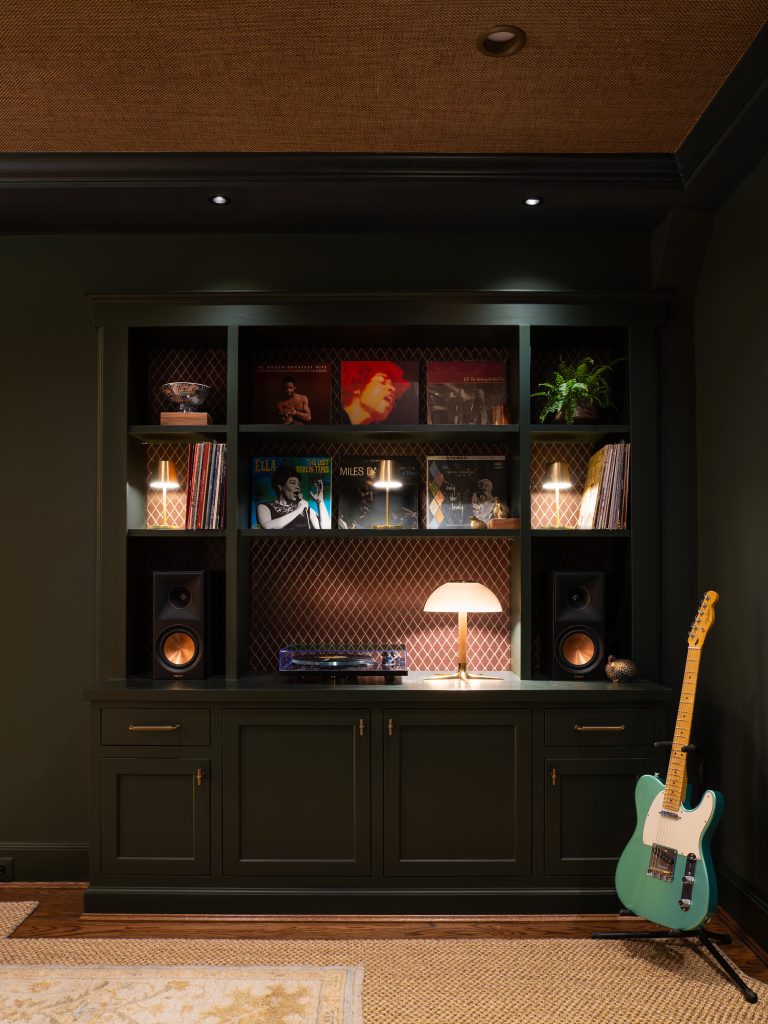
The analog room emerged as part of a kitchen renovation that allowed the couple to reclaim a rarely used lower-level space beneath it. The expansion created room for the gym, lounge, bathroom, and the analog retreat, which showcases James Patterson’s Fender and Gibson guitar collection, an oversized portrait of Jimi Hendrix, and custom built-in bookshelves whose backs are lined with authentic grill cloth from the German amp maker Vox. “When the music room is not used for impromptu karaoke concerts, it easily becomes a game room for the Pattersons, where they can simply unplug,” designer Riddell adds.
In a world increasingly defined by speed and screens, the Pattersons’ analog room offers something rare: permission to be still. And within this thoughtfully updated Tudor, it stands as proof that the most forward-thinking design choice may simply be making space to just disconnect.


ARCHITECT: BarnesVanze Architects
BUILDER: CarrMichael Construction
INTERIOR DESIGNER: Colman Riddell Interiors
Photography by Adam Kane Macchia
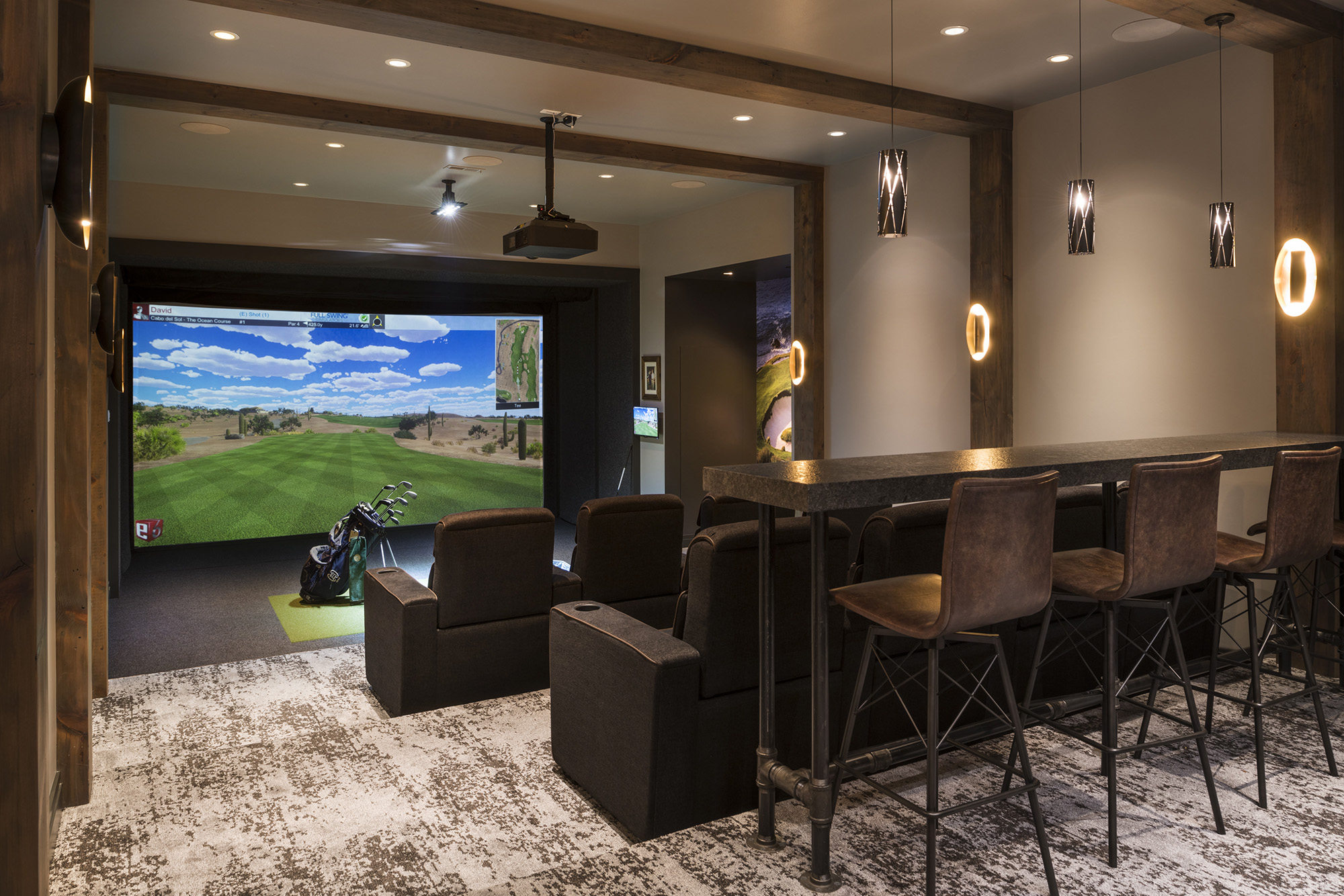
When a couple began outlining the priorities for their new-build home, one request quickly rose to the top of the list: a state-of-the-art golf simulation room that would allow one of the homeowners to play world-class courses without ever leaving the house.
Rather than treating the request as a standalone amenity, J.E. Schram Architect, Delbert Adams Construction Group, and Lauren Hurlbrink Interiors embraced the idea as an opportunity to create something more immersive. The result is a golf simulation lounge that rivals those found in private country clubs, seamlessly merging advanced technology with thoughtful architectural design.
At the center of the space is a Full Swing golf simulator equipped with overhead launch monitors that accurately track swing speed, ball trajectory, and spin. A wall-to-wall projection screen renders iconic courses from sunbaked desert fairways to lush, rolling greens.
Yet it is the room’s atmosphere that elevates it beyond a high-tech game room. Exposed wood ceiling beams, layered lighting, and richly textured finishes soften the digital elements, giving the lounge the feel of a modern clubhouse. Plush seating and a bar-height counter encourage guests to linger, whether watching a round unfold, gathering for a movie night, or entertaining friends.
“When you walk down the steps into that room, you immediately understand how special it is,” says Gina Adams of Delbert Adams Construction Group. “It’s elegant, inviting, and exactly what the homeowners envisioned.”
With their children grown, the homeowners shifted their focus toward spaces that support personal passions and shared experiences. In doing so, the golf simulation lounge became more than a luxury; it became the centerpiece of the home, transforming a lifelong love of the game of golf into a daily ritual.


ARCHITECT: J.E. Schramm
BUILDER: Delbert Adams Construction Group
INTERIOR DEISGNER: Lauren Hurlbrink Interiors
Photography by Marco Ricca
In Georgetown, where acclaimed restaurants and cocktail bars are not in short supply, a pair of homeowners set out to create a lounge at home that could hold its own against the neighborhood’s best. The homeowners enlisted luxury interior designer Patrick Sutton, known for his storied approach and richly layered custom interiors.
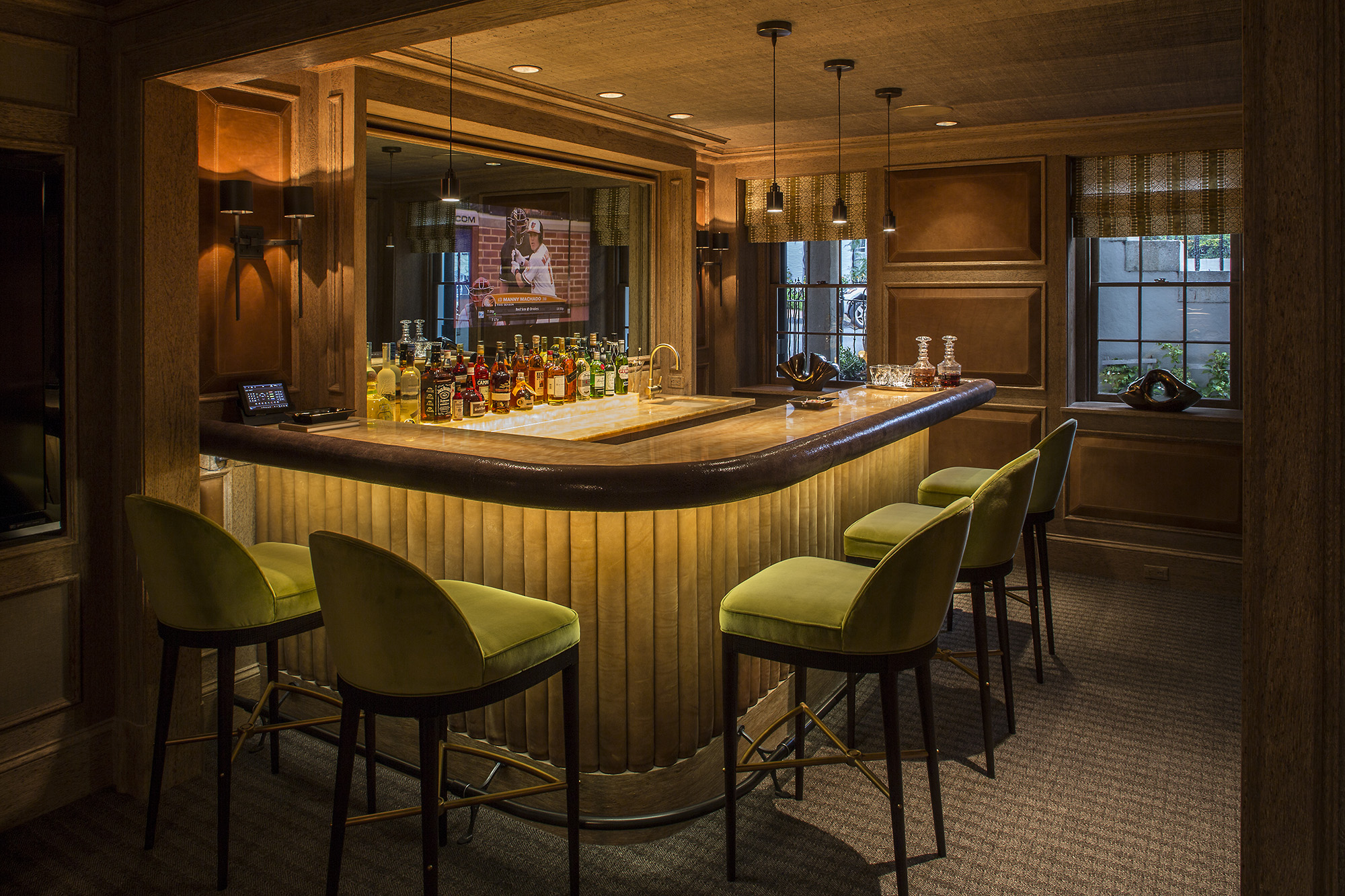
“This bar lounge was inspired by the Hemingway bar in Paris and was created to welcome guests for before-dinner cocktails and then welcome them back for late-night drinks and a good time,” says Sutton of the year-long project, completed with BarnesVanze Architects and Winchester Construction.
The space unfolds like a modern speakeasy. Warm honeyed wood paneling wraps the room, illuminated by low amber lighting that sets an intimate tone. A curved bar clad in ribbed suede is topped with creamy honey onyx, while slim pendant lights hover overhead. Deep moss-green velvet barstools introduce softness, and a mirrored backdrop amplifies the glow, reflecting glassware and brass accents in a setting designed for well-mixed drinks and long, leisurely chats.


ARCHITECT: BarnesVanze Architects
BUILDER: Winchester Construction
INTERIOR DESIGNER: Patrick Sutton
© Annapolis Home Magazine
Vol. 17, No. 2 2026