- © 2026 Annapolis Home Magazine
- All Rights Reserved

by Kymberly Taylor
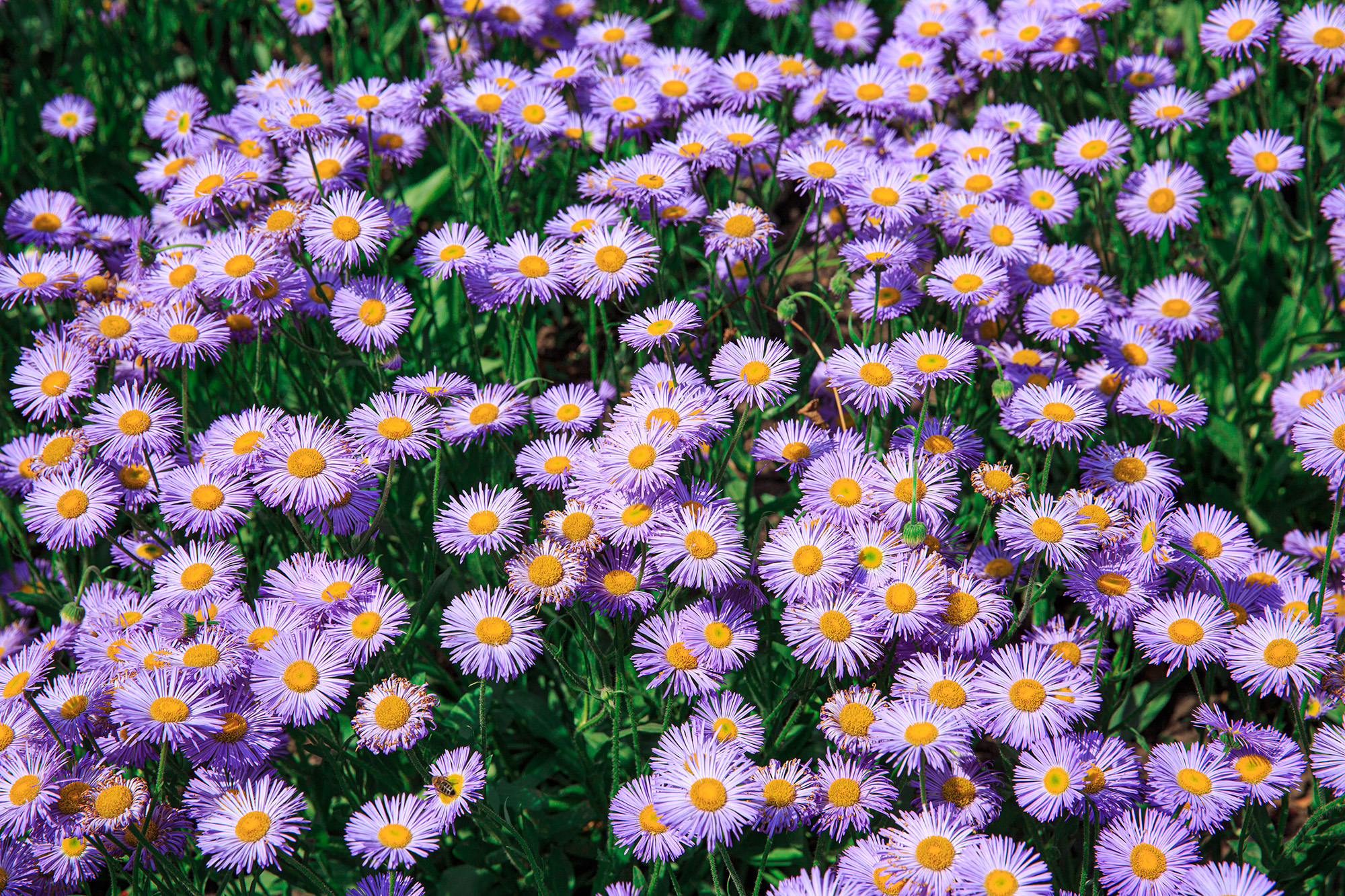
As summer winds down, many of my plants look depressed, blooming half-heartedly like partial truths. I bow, thank them for their service, and head right over to the nearest garden shop! I am searching for asters, sturdy daisy-like perennials in the Asteraceae family. They never fail to rev up the entire garden with hundreds of pale blue star-shaped blossoms that also advertise “Buffet Open” to late-season pollinators searching for precious nectar.
For centuries, botanists believed that the Aster genus originated in ancient China and East Asia. In fact, many modern varieties are sold across the country. However, recent genetic mapping has revealed something astonishing: North American asters evolved independently from Old World species and have been reclassified as “native” to our continent. They are still in the Asteraceae family, but botanists have assigned them their own genera, which include Symphyotrichum and Eurybia. These wildflowers populated our grasslands, woodlands, and savannahs long before the first Europeans arrived and are excellent alternatives to the Asian aster.
Native asters are easy to grow, rugged, and hardy in USDA zones 4 to 8. According to the Alliance for the Chesapeake Bay’s Native Plant Center, they prefer full sun to light shade and grow best in well-drained loamy soil. Symphyotrichum novae-angliae, commonly known as New England Aster, does especially well in Maryland. Other popular cultivars include Blue Star, Esther, Golden Spray, and Pink Cloud.
Plant asters in groups of three to five, towards the back of the garden as they tend to get tall. Though each individual flower is delicate, asters can bloom in masses so sensational they inspired Monet to paint his famous “Asters” in 1880. Individual ray-like petals radiate around a bright yellow disk that, upon close inspection, is packed with tiny tubular florets that offer “cups” of nectar and pollen. The disks, which change from bright yellow to deep magenta or brown over time, are convenient platforms. Heavier insects like beetles and wasps crawl across dozens of tiny florets, gathering food efficiently in one stop.
According to The Native American Ethnobotany Database, various American Indian tribes depended on asters for a wide variety of medicinal purposes. The Cheyenne infused the stems to make eardrops for earaches. The Kawaiisu decocted the roots to create a wash for headaches, while the Iroquois decocted the dried roots and leaves to prepare love potions.
Along with its practical uses, there is something extra-special about the aster—each flower resembles a tiny starburst. In fact, “aster” is derived from the ancient Greek word astḗr, which means “star”. Scholars note that Ancient Greeks did not cultivate asters but gathered the wild plants to weave sacred wreaths for temple altars. They also burned the leaves to ward off evil spirits and snakes. Greek mythology tells a story about a goddess named Astraea who once lived on the earth but fled to the heavens when humans became too cruel. She cried because she wished there were more stars in the sky. When her tears fell to earth, they grew into star-shaped aster flowers.
Gardens do many things for us, but I have never thought of them as a repository for sorrow. Then again, when things go terribly wrong, I know that the garden is always there for me. Though I have been too busy to visit (or even water, for that matter), the asters still shine out at me, with their golden centers and flirtatious fringe. I have to admire their spirit. Though their life is short, these blossoms radiate a pure, intense resilience, steadily capturing the last heat and light of the season to serve all who need them.
Note: Asters have petals that reflect UV light while their centers absorb it, forming a “bullseye” that guides insects straight to pollen and nectar.
© Annapolis Home Magazine
Vol. 17, No. 5 2026