- © 2026 Annapolis Home Magazine
- All Rights Reserved

by Kymberly Taylor
As I step away from my phone, computer, and all things technology, my garden is almost poetically quiet. My basil is not offering to rewrite this paragraph. Blessedly, my clematis does not want to “chat”! More than ever, I appreciate my garden’s special, fertile autonomous intelligence.
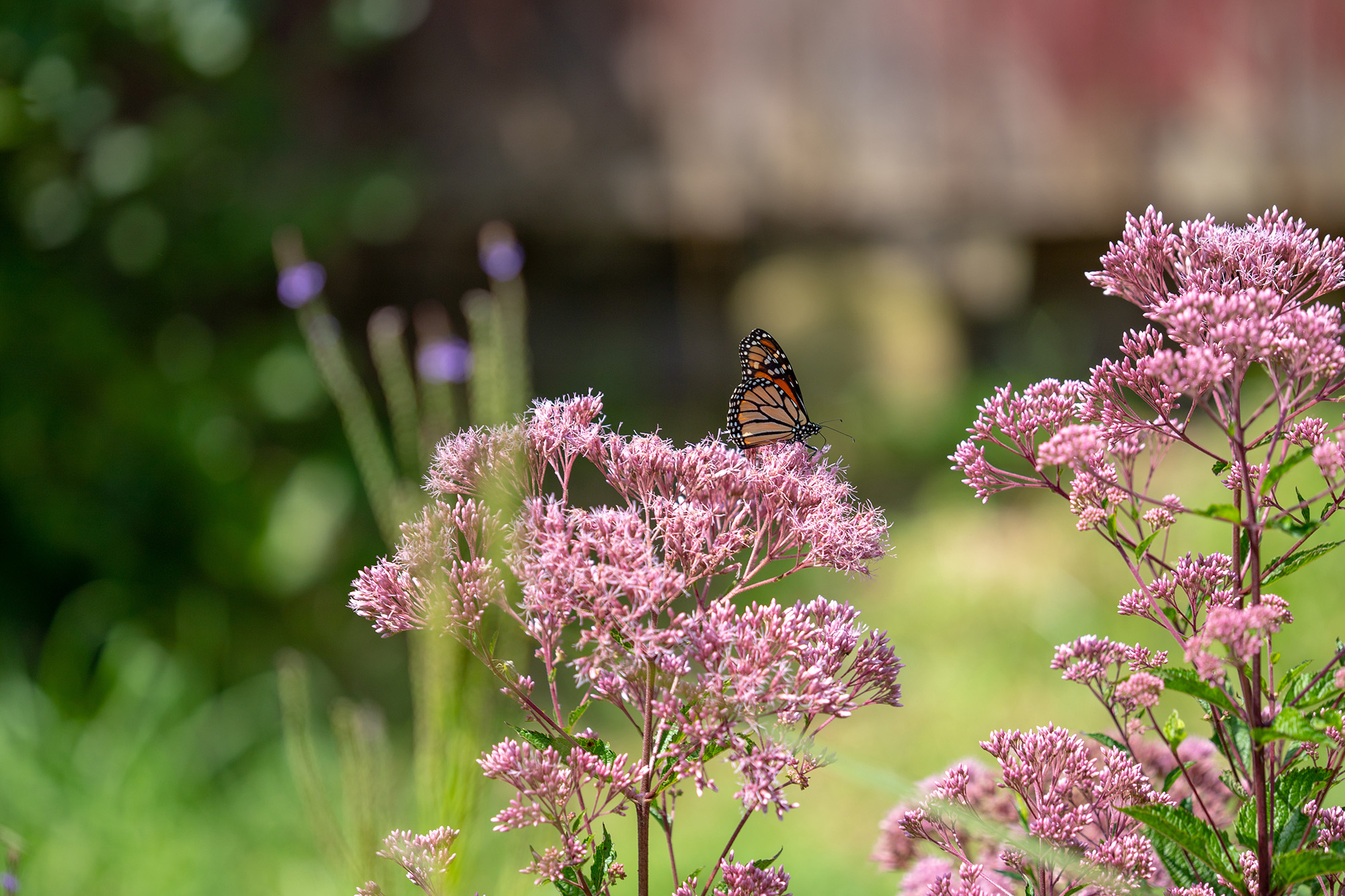
Lately, perhaps because of my busy schedule, I am fascinated by low-maintenance flowers that “give back.” I want to plant, water a bit, and then watch my fledglings thrive, flower, and set seed. And the reliable native Joe Pye Weed, Eutrochium purpureum, tops my list! Here’s why: this towering perennial, which is not a weed, is covered in rhapsodic pink blooms, grows quickly up to 6 feet tall, is a late-season nectar source for pollinators, and is highly beneficial. Every part of this plant was useful to Native Americans: from roots brewed to break fevers to blossoms crushed to create dyes.
This sturdy titan evolved millions of years ago during the Cretaceous period, in tandem with a surge of insect life. Native to Eastern and central North America, where it helped colonize wetlands and forests, Joe Pye is a host plant to over 40 species of moth and butterfly caterpillars, including ruby tiger moths and clymene moths. Birds and small wildlife feed on its seeds.
There is much speculation, but Joe Pye Weed may have been named after Joseph Shauquethqueat, a Mohican sachem (tribal leader) living in Colonial Massachusetts in the 1800s, according to a recent article in The Great Lakes Botanist. To communicate easily with colonial authorities, he adopted the name “Joe Pye” and became associated with the plant after using it to treat fevers, including typhoid. Alternatively, according to an Anishinaabe ethnobotanist, “Joe Pye” is the anglicized spelling of Zhopai, an Abenaki medicine man who treated typhus and high fevers with the plant Pkuwiimakw, the name for Joe Pye Weed in the Munsee language. No matter what, this fascinating species has been traced to Native American healers who shared their herbal medicine with early settlers when they needed it most—and still blooms in our gardens today.
Plant Joe Pye in full sun to part shade in humus-rich soil at the back of your beds to anchor your garden. For a meadow-like effect, cluster 20 to 30 together for a brilliant show and to draw clouds of monarchs and other pollinators at bloom time. There are so many, you may want to replace your butterfly bush, which is not native, with these proliferous beauties. Its dusky purple flowers pair beautifully with yellow goldenrods or black-eyed susans. If you don’t have room, keep an eye out for hybrid varieties that are much smaller but just as beautiful.
I am moved by this native plant with true animal magnetism, whose stunning beauty is equally matched by its utility. Joe Pye will always have a place in my garden, especially since its hardy clump-forming rhizomes ensure it can live for decades or even centuries, according to horticultural experts.
Even as I say the word garden in my mind, I begin to relax. I’m grateful for the peace it offers and for its courteous plants that mind their own business, which is to replenish the atmosphere with oxygen so we may have life. I am also in awe of their “technology.” In her fascinating book “The Light Eaters,” Zöe Schlanger reminds us that plants have sophisticated biotechnologies that outperform and often inspire our own.
She explains that plants developed over 500 million years ago, when “they climbed out of the ocean” into a deadly fog of carbon dioxide and hydrogen. They already knew how to unlock oxygen from carbon dioxide dissolved in the ocean, and “adapted their technology to their new world,” she says. “They breathed out,” eventually tipping the balances of gases towards oxygenation. Today, through photosynthesis, they literally “create” our atmosphere.
How wonderful that we have Joe Pye to remind us of our history and, in addition to replenishing our world with air, invite buzzing, singing, floating, and flying friends to the garden to continue the process.
Zone: 3-7
When to Plant: Spring
Light: Full sun
Blooms: July-September to part shade
Soil: Moist
Water: As needed
Tip: Early leaf damage by caterpillars will be hidden later by new growth foliage.
Note: Joe Pye Weed is a hardy, rhizomatous plant that can persist for decades or even centuries, with some sources hinting at roots that predate significant human intervention.
Image Credit: Monarch butterfly on Joe Pye Weed at the Parris Glendening Nature Sanctuary in Lothian Southern Maryland, Anne Arundel County. Photo by Yvonne Navalaney.
©Annapolis Home Magazine
Vol. 17, No. 3 2026